

Multi-Agent Systems: When Your AI Needs an AI Team
Your single AI agent is already a bottleneck. The future is multi-agent systems, networks of specialized agents coordinating to handle what no individual system can.

If you’ve successfully deployed your first AI agent in production, congratulations, you’re ahead of 89% of organizations. But here’s the uncomfortable truth: that single agent, no matter how sophisticated, is about to become a bottleneck. The leading edge of enterprise AI has already moved past individual agents to multi-agent architectures, networks of specialized AI agents that communicate, coordinate, and collaborate to execute workflows that would overwhelm any single system.
How agent-to-agent communication is creating the next breakthrough in enterprise AI, and why your single-agent strategy is already outdated
The most significant shift happening in AI right now isn’t about making individual agents smarter. It’s about making them work together.
While most organizations are still trying to deploy their first AI agent, leading companies are already building multi-agent systems, networks of specialized AI agents that coordinate to execute complex workflows that no single agent could handle alone.
What These Protocols Actually Are
Here’s the simplest explanation: MCP, A2A, and ACP are universal translators for AI systems.
Right now, when you use ChatGPT, Claude, or Gemini, each AI lives in its own isolated bubble. It can’t access your calendar, can’t read your company’s internal documents, can’t pull data from your CRM, and can’t coordinate with other AI tools you use. Every interaction starts from scratch.
These three protocols change this. They’re standardized ways for AI systems to connect to your data sources, tools, and other AI agents, without custom integration work for every single combination.
From Solo Performers to AI Orchestras
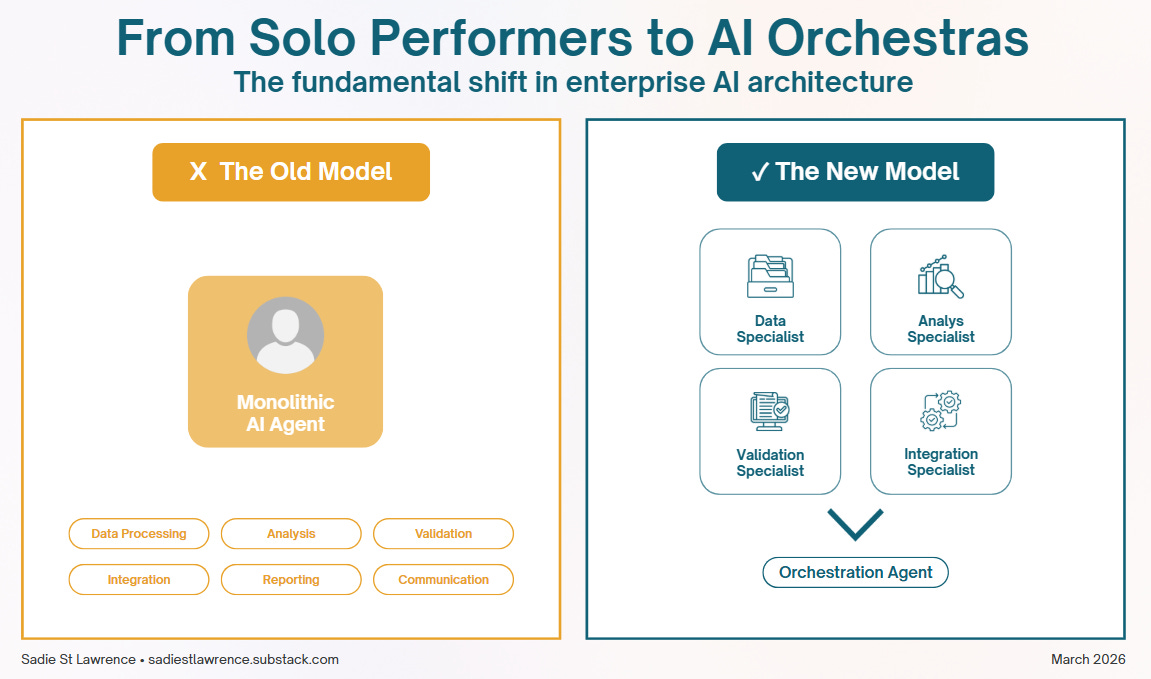
Think about how human organizations work. You don’t hire one superhuman employee who handles everything. You build teams of specialists who excel in their domains and collaborate across functions. The same principle now applies to AI agents.
The old model: A single agent trying to handle an entire complex workflow.
The new model: Multiple specialized agents, each mastering a specific task, coordinating through standardized protocols.
Organizations successfully implementing multi-agent systems are reporting:
60%+ productivity gains beyond single agents (MIT 2025)
Autonomous end-to-end workflow execution across multiple systems
Self-healing processes where agents correct each other’s errors
The Three Building Blocks
1. Communication Protocols
The breakthrough came in late 2025 with standardized communication protocols:
Model Context Protocol (MCP) - Anthropic’s protocol (now Linux Foundation), enabling agents to share context across platforms.
Agent2Agent (A2A) - Salesforce and Google Cloud’s interoperability protocol for cross-platform collaboration without vendor lock-in.
Agentic Communication Protocol (ACP) - IBM’s standards for agent messaging and task handoffs.
These protocols solve the Tower of Babel problem; now, an agent built on OpenAI can seamlessly communicate with one built on Google’s Gemini or Anthropic’s Claude.
2. Specialized Agent Roles
In effective multi-agent systems, each agent has a clearly defined domain:
Orchestrator Agents - Coordinate workflow and delegate tasks
Specialist Agents - Deep expertise in specific domains
Validation Agents - Check work and trigger corrections
Integration Agents - Handle connections to external systems
3. Shared Context
Agents maintain a shared understanding of workflow state, decisions made, data generated, and exceptions encountered. This prevents redundant questions and inconsistent decisions.
Real example: A financial services client processes loans in 4 hours (down from 5 days) using coordinated intake, validation, risk assessment, pricing, and documentation agents, all sharing context throughout the process.
The Three Coordination Patterns
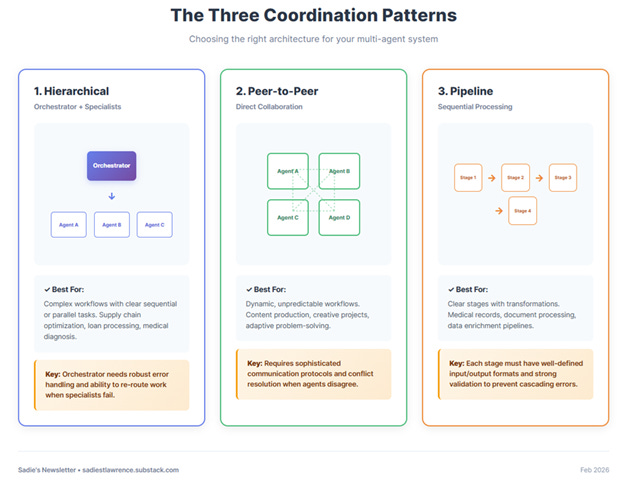
✅ Hierarchical Coordination
Structure: Orchestrator manages specialist agents
Best for: Supply chain optimization, loan processing, complex sequential workflows
Key: Robust error handling and re-routing capability
✅ Peer-to-Peer Collaboration
Structure: Agents communicate directly, negotiating task distribution
Best for: Content production, creative projects, adaptive workflows
Key: Sophisticated conflict resolution mechanisms
✅ Pipeline Architecture
Structure: Sequential stages, each agent processes and passes forward
Best for: Medical records, document processing, data transformation
Key: Well-defined input/output formats and strong validation
What Doesn’t Work
❌ Too Many Agents: Coordination overhead scales quadratically. Start with 3-5 agents maximum.
❌ Unclear Boundaries: Overlapping responsibilities create duplicated work and conflicting decisions. Define explicit domains.
The Real Technical Challenges
Evaluation complexity: You must evaluate each agent, their coordination quality, communication effectiveness, AND system-level outcomes.
Non-deterministic debugging: When failures happen, tracing the root cause is difficult. Was it one agent’s bad decision, poor communication, or correct individual choices that led to bad system outcomes?
Cost management: Each agent interaction triggers API calls. Use smaller models for routine tasks, cache common queries, and route to powerful models only when needed.
Your Transition Path
Don’t jump directly to multi-agent systems. Follow this progression:
Phase 1: Master single-agent deployment (1-3 months). Get one agent working reliably. Learn evaluation and monitoring.
Phase 2: Add one complementary agent (1-2 months)
Implement simple agent-to-agent communication. Learn coordination.
Phase 3: Build core multi-agent system (2-4 months). Design a 3-5 agent system for a complete workflow. Build evaluation frameworks.
Phase 4: Optimize and expand (Ongoing). Refine based on production data. Add agents only when justified.
New Skills Required
Managing AI teams requires different skills from prompting individual agents:
From: “How do I prompt this agent effectively?”
To: “How do I design workflows for agent collaboration?”
New roles emerging:
AI Orchestration Managers - Design multi-agent workflows
Agent Performance Analysts - Monitor system metrics and identify bottlenecks
Multi-Agent Architects - Design communication patterns and boundaries
What to Expect in 2026
Standardization accelerates - MCP, A2A, and ACP protocols converge, making cross-platform collaboration routine.
Platform competition shifts: the battleground becomes orchestration infrastructure, not individual agent intelligence.
The skills gap widens: organizations with multi-agent capabilities pull further ahead.
New failure modes emerge: poorly designed systems will fail spectacularly, creating important lessons about coordination and governance.
The Bottom Line
If you’re planning your single-agent strategy, think multi-agent from day one.
Ask yourself:
How will this agent hand off work to others in the future?
What communication protocols should we standardize on now?
Where are the natural boundaries for agent specialization?
What orchestration capabilities do we need to build?
The companies winning with AI in 2026 won’t have the most advanced individual agents. They’ll have figured out how to make agents work together effectively.
Multi-agent systems aren’t the future, they’re the present. The question is whether you’re building for it.
Stop Bouncing Between Tabs: The “Insane” Research Workflow for 2026
If you’ve been following my work for a while, you know that the #1 thing holding people back isn’t the technology itself, it’s their workflow. Most people spend hours bouncing between browser tabs, copy-pasting research, and losing context halfway through.
In my latest video, I break down a powerhouse combination that will completely change how fast you go from a basic idea to a high-level presentation: Perplexity + NotebookLM.
The 2-Step Workflow I Use:
Deep Analysis with Perplexity: I show you how to use the “Analyze” feature to break down complex research questions into sub-questions. The real magic here is the source transparency, which you can validate exactly where the data is coming from.
Synthesis with NotebookLM: Perplexity is great for finding info, but NotebookLM is where you build. I walk you through how to import those specific, trusted sources to create gorgeous, data-backed slide decks and infographics that look like they were made by a high-end consultant.
Take the Next Step: Become an AI Orchestrator
If you enjoyed the workflow in today’s video, you’ll love the deep dive I take in my new book, “Becoming an AI Orchestrator: A Business Professional’s Guide to Leading, Creating, and Thriving in the Age of Intelligence.”
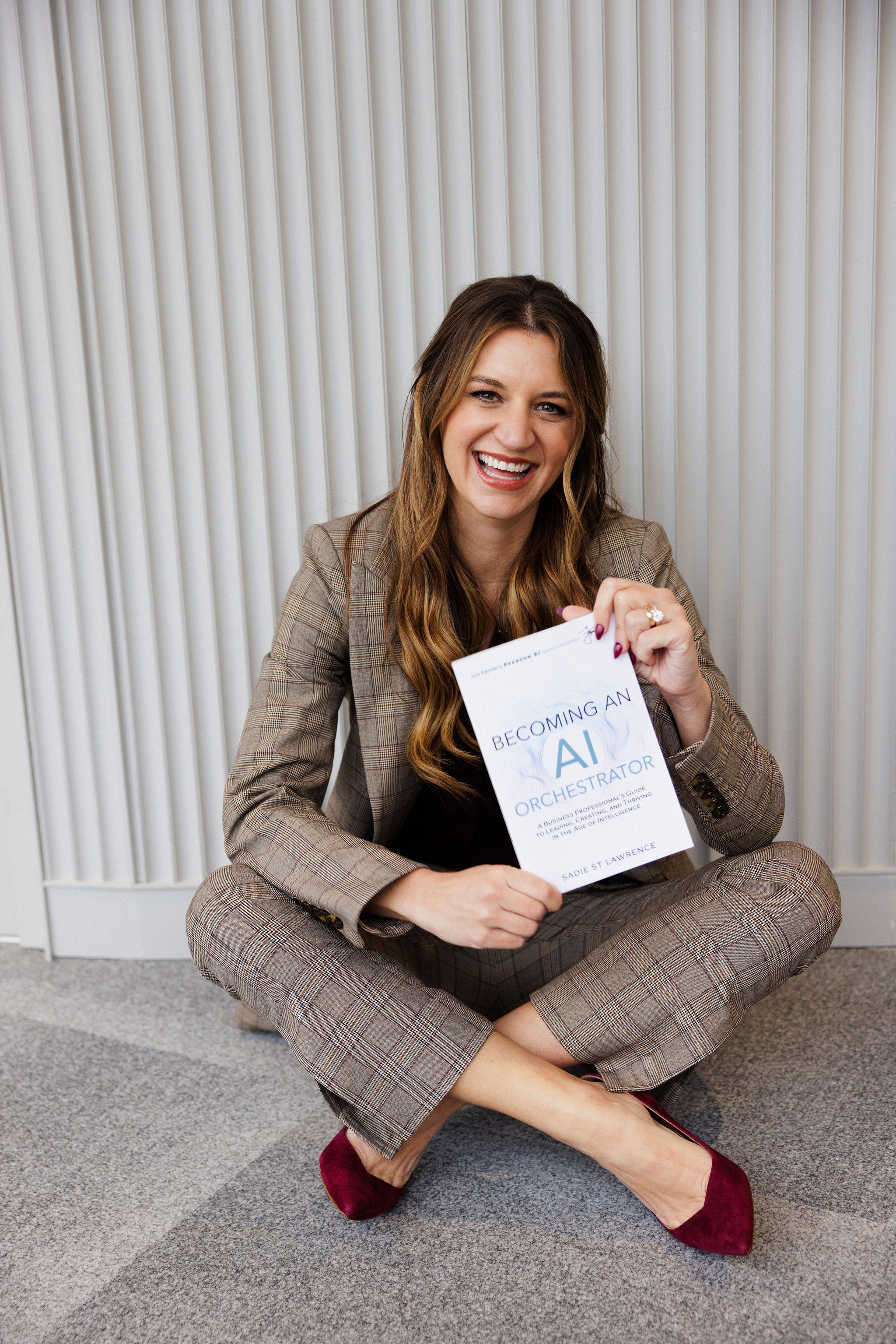
In the video, I showed you how to connect tools. In the book, I show you how to connect strategy to results.
We are moving past the era of just “using” AI; we are entering the era of Orchestration. Whether you are a leader, a creator, or a knowledge worker, this book is your roadmap to:
Mastering Human-AI Collaboration: Learn how to lead teams where machine efficiency meets human creativity.
The Art of Prompting: Go beyond the basics with my advanced prompting toolkit designed for real-world analytical and creative tasks.
Future-Proofing Your Career: Build the “Orchestrator” mindset that keeps you indispensable as the technology continues to evolve.
This isn’t just a book about technology - it’s a guide to bringing your visions to life and leading with confidence in this new landscape.
Order your copy on Amazon today!
What’s your organization’s biggest barrier to implementing agentic AI? I’m collecting perspectives from leaders navigating this transition. Hit reply and share your story. I’ll be synthesizing these insights in an upcoming research report from HMCI.
Sadie’s Newsletter is a reader-supported publication. To receive new posts and support my work, consider becoming a free or paid subscriber.