

Mid-Year Review: Building, Learning, and Narrowing the Focus
I can’t believe we’re already halfway through the year.
By Sadie St. Lawrence | Human Machine Collaboration Institute
I love doing mid-year reviews because I believe a big part of building the future is understanding the context of where we’ve been. Progress moves fast, especially in a startup, and if you don’t pause to reflect, you can miss the lessons hiding inside the momentum.
So this is my freeform mid-year review: what I’ve been focused on at HMCI, what we’ve learned, what has surprised me, and where we’re headed next.

Building a High-Performing Team
My biggest focus this year has been building an exceptionally high-performing team.
And here’s what I’ve learned: it is hard.
You can’t just write out your culture. You have to live it. Six months in, we are rethinking our bonus structure around the culture we actually want to reinforce — not just the values that sound good on paper, but the behaviors we live and breathe every day.
The second thing I’ve learned is that the more people you add, the slower you get.
We are still a small team, just under ten people, but it is wild how much more communication, coordination, and context-sharing is required as you grow. More people means more meetings, more alignment, and more chances for things to get lost in translation.
But that is also how you scale.
It is funny: sometimes you have to slow down in order to scale up.
The biggest leadership lesson for me has been that you can’t lead like everyone else leads.
I came from corporate environments where leadership often meant constant one-on-ones, structured meetings, and meetings about meetings. So naturally, when I first started building the team, I set things up that way.
And then I realized I hated it.
It was not good for me, and honestly, it was not good for the team either.
So we changed how we work. We still do quarterly reviews. We still create space for feedback and alignment. But our default is now offline first. If we can solve something asynchronously, we do. If we need to meet, we meet. But we don’t meet just because the calendar says we should.
That has been an important lesson for me: leadership only works when it is authentic to the way you actually operate.
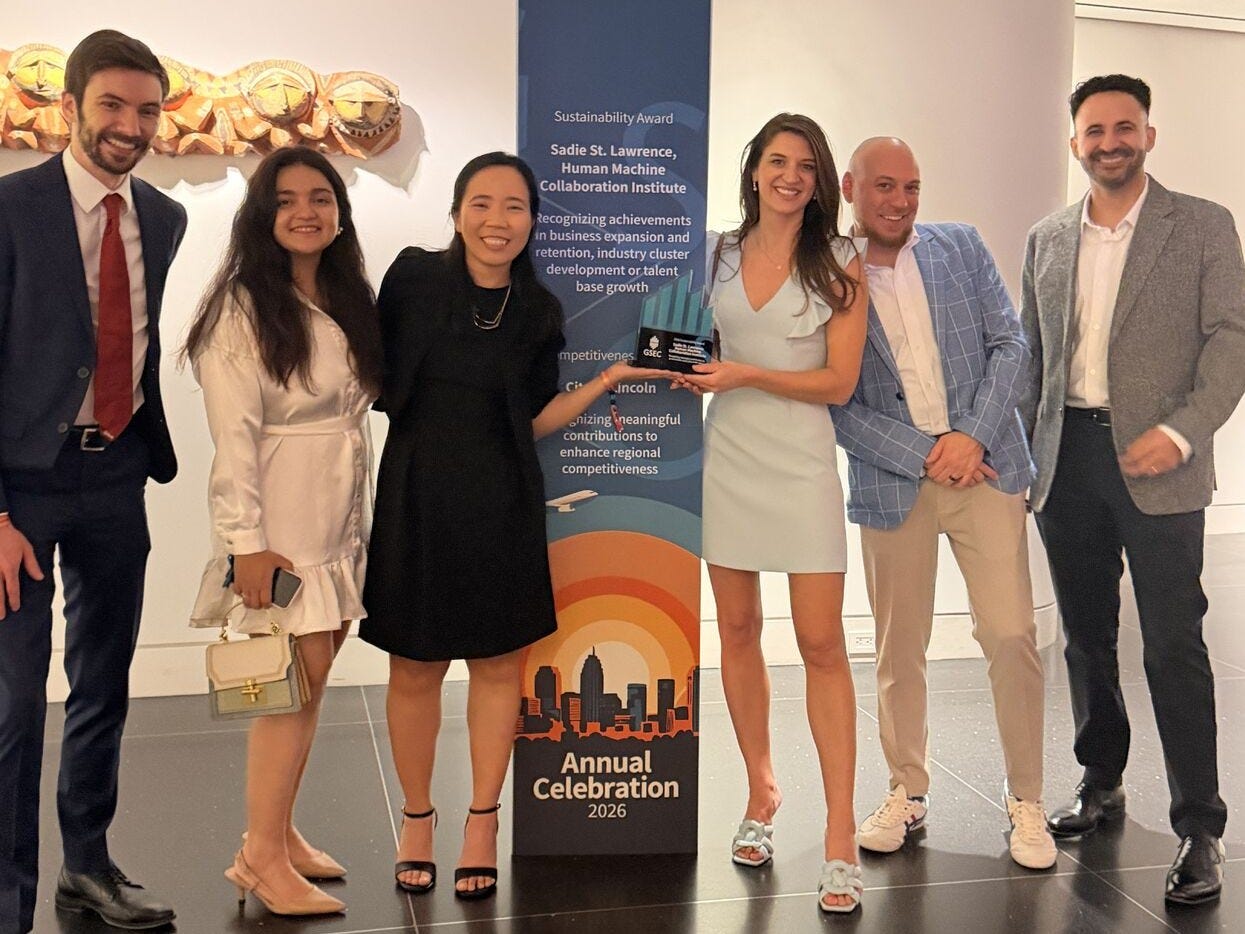
Human-Machine Teaming Is Hard
This one has been fascinating.
Human-machine teaming does not come naturally to most people.
Some people are definitely better at working with AI than others, but the truth is, we are all still figuring it out. And for people who have worked in one institution, one workflow, or one way of operating for a long time, learning new ways of working can be difficult.
Being good at working with AI is not just about knowing which tool to use. It comes down to:
Systems thinking
Deep expertise in your domain
Knowing how to ask better questions
Not outsourcing your thinking to AI
Testing, trying, and finding new patterns of work
That last point matters.
AI does not remove the need for expertise. In many ways, it increases the value of expertise. The people who will do the best with AI are not the ones who blindly hand work over to it. They are the ones who can think deeply, test quickly, and understand where the machine adds value and where human judgment still matters most.
Overall, building the team has been incredibly fun. I’m excited for the second half of the year because I feel like we are just getting started — and all of this foundational work is going to pay off.
Building an AI and Robotics Ecosystem
Now for the big one.
As many of you know, we have been building an AI and robotics ecosystem in partnership with NVIDIA.
Overall, it has been amazing.
There are some big partnerships and announcements coming that I can’t share yet, but the progress we have made in such a short amount of time has been wild.
One thing I will say: if you are building something ambitious outside of a traditional top-tier tech city, you are going to fight fear.
A lot of it.
The amount of skepticism around this project has been surprising. People have said it would fail. People who used to be mentors have questioned it. People have doubted whether something this ambitious could happen here.
And honestly, that has only made the vision clearer.
When you are doing groundbreaking work, you have to fight the fear and focus on the wins. You have to keep the vision strong, even when other people can’t see it yet.
That is probably my biggest lesson from this work so far:
The strongest dreamer wins.
And we have some really big announcements coming.
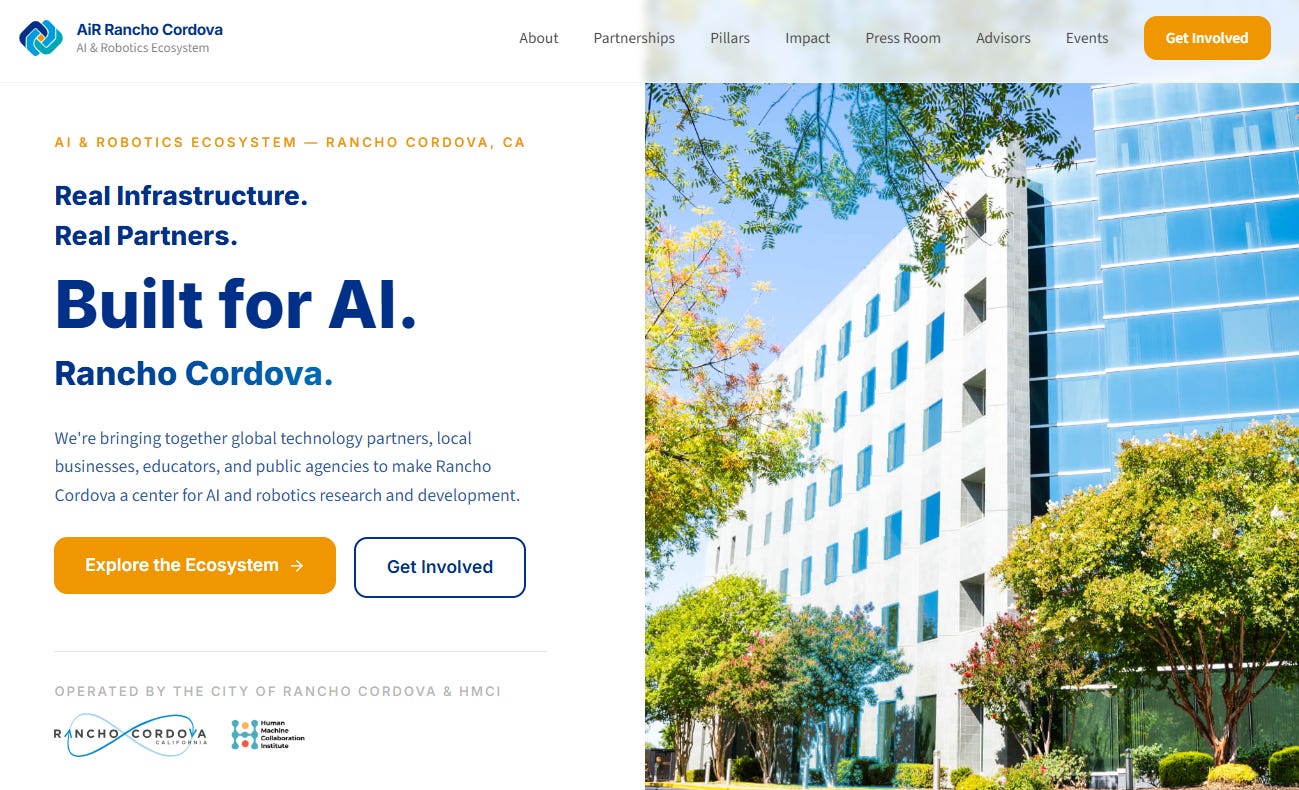
Curious about what’s next? Visit our website to learn more about our growing AI and robotics ecosystem and what’s on the horizon. → https://cityofranchocordova.ai/
AI Strategy: Still People, Process, and Technology
On the AI strategy consulting and advising side, this continues to be our bread and butter.
And what I’ve realized is that AI strategy is not as different from past technology transformations as people think.
It is still people, process, and technology.
Yes, the tools are more powerful. Yes, the pace is faster. Yes, AI introduces new questions around governance, trust, change management, and human-machine collaboration.
But at the core, the fundamentals still matter.
You have to understand the people.
You have to fix the process.
Then you apply the technology.
This side of the business has grown significantly because every organization is trying to figure out what AI means for them. But the good news is we do not have to reinvent the wheel every time.
Keep it simple: people, process, technology.
The Biggest Surprise: Media
The biggest surprise this year has been the media side of the business.
For a long time, I would have described myself as a part-time content creator. It was something I did alongside the “real work.”
But this year, that side of the business has really started to take off, especially through brand partnerships, media work, and storytelling around technology.

And I have realized a few things.
First, I really enjoy working with different brands and clients to tell their stories. I love learning about their technology, understanding what makes it matter, and helping translate it for a broader audience.
Second, it actually strengthens our work at HMCI. The media work, research, consulting, and ecosystem building all feed into each other. The more we learn from companies building the future, the better we can serve our clients. The more we understand what audiences care about, the better we can communicate complex ideas.
It has become a circular focus that builds on itself.
And third, there is a real gap in the market.
It is rare to find people who understand the technical side, can communicate clearly, and have a media presence. That intersection has become a much bigger opportunity than I expected.
Coming into the second half of the year, the media side of the business is going to become much more focused. I’m excited for the new show we’re about to release and for new ways we’ll be working with brands.
In my next Substack, I’ll share more about that side of the business, including:
How to get started
How much you can make
How I recommend working with brands
Who I like working with
What I’ve learned so far
Narrowing the Focus
The second half of the year is all about narrowing the focus.
That is what I love about startups. You try things. You get feedback. You see what is working. Then you narrow.
For HMCI, that means focusing on a few key areas:
Keeboh, our open-source research platform
Our new AI infrastructure arm, which we’ll be announcing soon
Our media arm, which will continue to amplify our work, share stories, and educate people
The through line across all of this is simple: helping people and organizations use technology for good.
I feel extremely grateful for the progress we’ve made, the clients we’ve worked with, the partners who have believed in us, and the team that is helping bring this vision to life.
The first half of the year was about building the foundation.
The second half is about focus, momentum, and execution.
I hope you’ve had a meaningful first half of the year — and I’d love to hear what’s on your docket for the next half.
Sadie St. Lawrence is the Founder & CEO of the Human Machine Collaboration Institute and author of Becoming an AI Orchestrator. She writes weekly about the future of human-machine collaboration, AI in practice, and what it actually takes to build at the frontier.
This is so inspiring 😍