

Exploring Intelligence
How AI Challenges and Expands Our Understanding

Hi Friends,
As the weather warms up in the northern hemisphere, I've been enjoying the simple pleasures of tinkering with my plants in the backyard and soaking up the morning sun. It’s a great way to charge up for the day, and I hope you're finding your own ways to enjoy this season.
One of the unexpected benefits of recent advancements in AI has been a return to fundamental questions that challenge our understanding. Surprisingly, basic concepts like consciousness, emotion, and intelligence lack clear definitions. This realization has been both startling and inspiring for me.
At the institute, we're preparing to explore these topics more deeply. I believe it's crucial for humanity to continue expanding our knowledge in these areas. I’ll share more about this work soon. For now, I’d like to delve into the concept of intelligence, a term we frequently encounter in the world of AI.
Stay curious!
Sadie
Exploring Intelligence: How AI Challenges and Expands Our Understanding

One of the things I find interesting while trying to explain Artificial Intelligence is that A) we have no agreed-upon definition, and B) we often use the same word to describe it: intelligence. John McCarthy, who coined the term, defined it as "the science and engineering of making intelligent machines"—a lovely definition, but with one problem: we use the word 'intelligence' to describe the term itself.
So why is this so challenging? Other sources try to delve deeper by providing examples, such as Oxford Languages, which defines it as "the theory and development of computer systems able to perform tasks that normally require human intelligence, such as visual perception, speech recognition, decision-making, and translation between languages."
The issue here is that it uses the same word to describe something, but a second problem arises because the list of tasks that an AI system can perform continues to expand and change. This variability complicates the definition altogether.
Our understanding of intelligence continues to evolve, as does the intelligence itself.
For example, earlier views on intelligence often held that tool use and complex social behaviors were unique to humans. Observations and studies in the latter half of the 20th century challenged this perspective. Jane Goodall’s research on chimpanzees, for instance, revealed that they could make and use tools, demonstrating that tool use was not exclusive to humans. This expanded the definition of intelligence beyond human behaviors, recognizing that many species exhibit sophisticated problem-solving abilities, emotional intelligence, and social structures.
One observation I find fascinating is that we, as humans, pride ourselves on our intelligence. It is what we believe makes us the dominant species. I also think this is why AI scares some people; if intelligence is all we have to compete with in this world, what happens when we replicate it?
On the positive side, though, the pattern seems to be that what we think is innate to us, or part of our own intelligence—such as making and using tools—proves not to be the case. We then uncover new forms of intelligence and continue to expand our scientific discovery of it.
As we continue to replicate intelligence in machines, I anticipate this will also be the case with humans. We will uncover more of our own unique ways of being "intelligent" and expand our understanding of it, leaving a place and space for all.
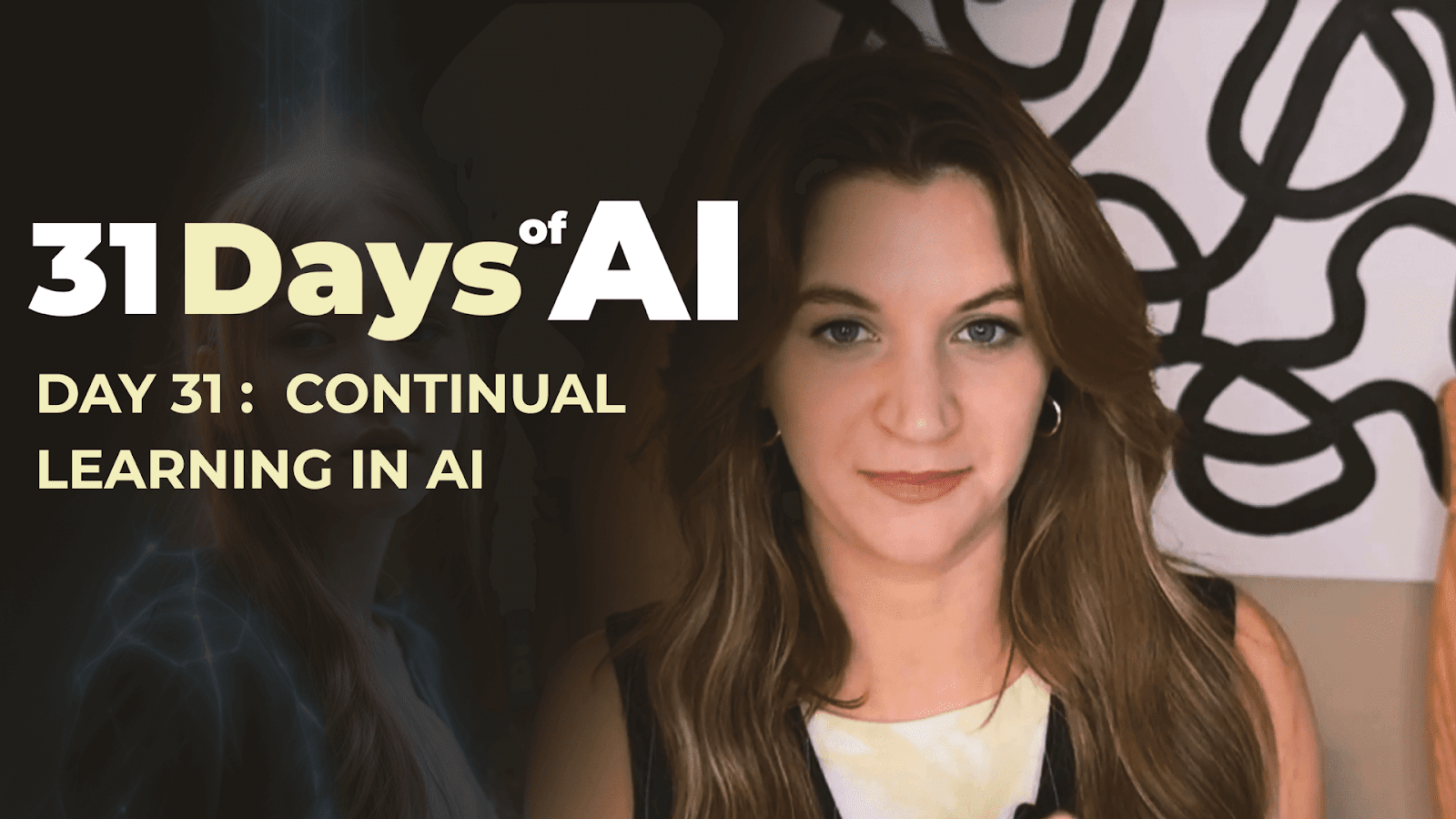
31 Days of AI
Last month I finished my 31 days of AI video series🎉. Each of these videos are only a minute or two long, and incase you missed a few you can catch the full series on my Youtube channel here.
Latest Data Bytes Podcast Episodes:
We have had some incredible guests on the Data Bytes Podcast. Check out the recent episode below.
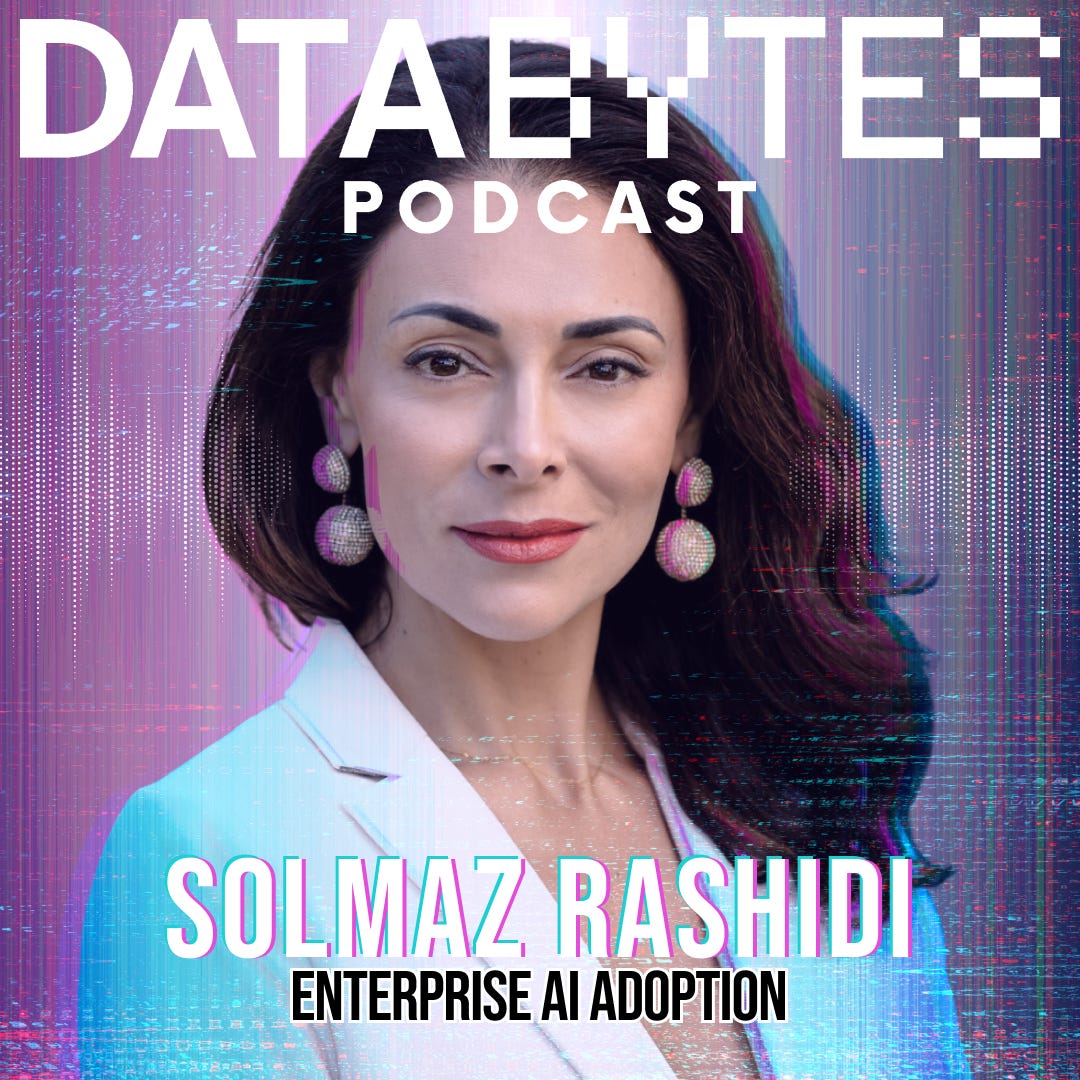
Enterprise AI Adoption with Sol Rashidi
Retrieval Augmented Generation and the Evolution of Data Science Roles with Harpreet Sahota
Effective Strategies for Data and AI Literacy with Priscila Papazissis
How to Cultivate a Growth Mindset with Dr. Ania Cwojdzinska
My Upcoming Events:
Here are a few of the events I will be speaking at in the coming months, hope to see you there!
Starbucks SIX:FLOW May 14, Seattle WA
SAP Sapphire 2024 Global June 3–5, 2024, Orlando, Florida
Data Connect Conference July 11-12, 2024, Columbus, Ohio
CDOIQ July 16-18, 2024, Cambridge MA